Who we work with
GMT operates at the intersection of energy, agriculture and infrastructure.
Developing a successful biomethane platform requires collaboration across a broad ecosystem, from landowners and feedstock suppliers through to commercial offtakers, local communities and industry partners.
We work with organisations seeking long-term value from UK-produced carbon negative renewable natural gas, carbon dioxide and bio-fertiliser, while supporting domestic energy security and the growth of the UK's biomethane economy.
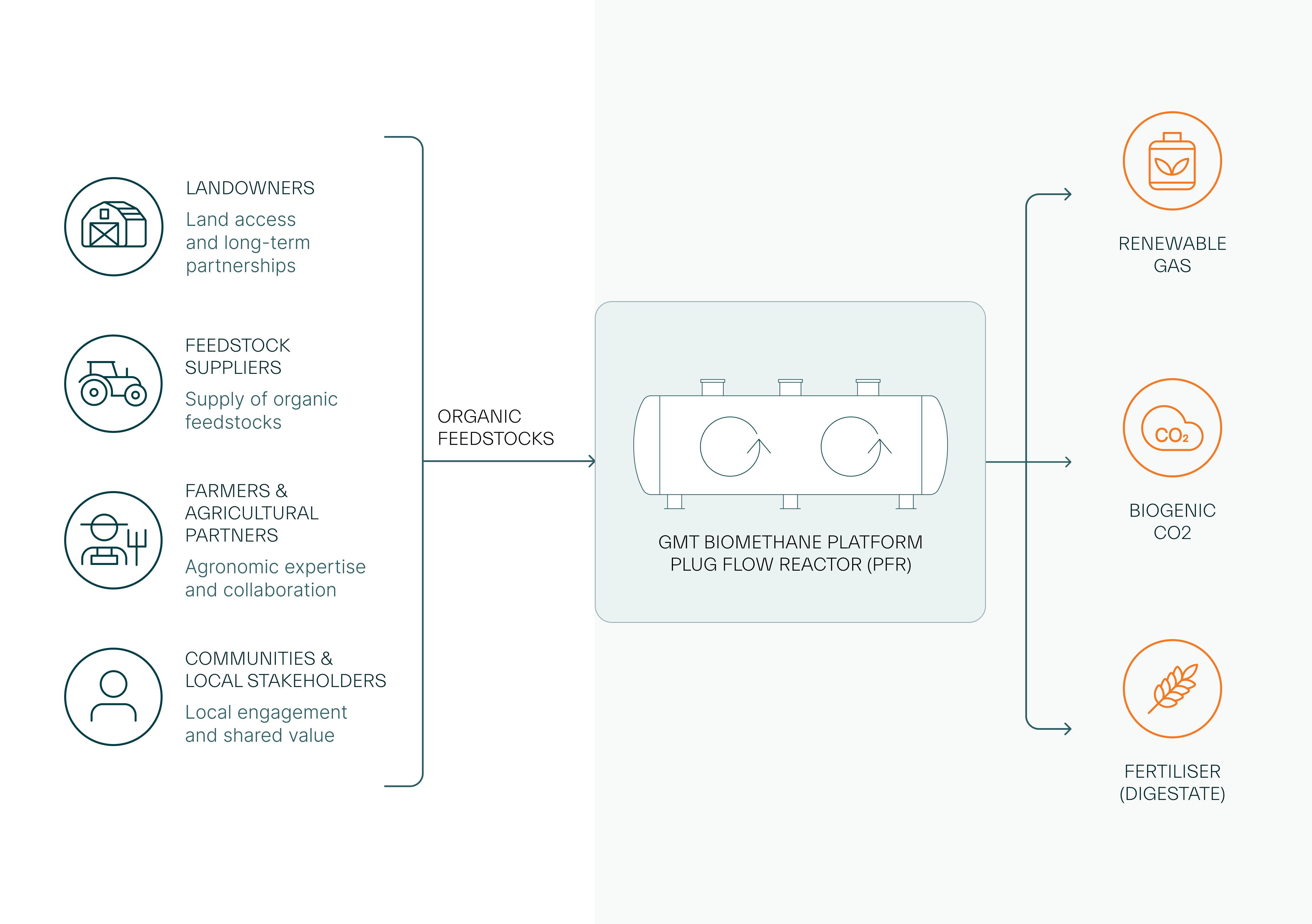

Biomethane infrastructure depends on long-term collaboration across land, feedstock, planning and project delivery.
GMT works with landowners, feedstock suppliers, planning stakeholders and delivery partners to develop infrastructure designed for long-term operational performance. From site identification and feedstock strategy through to planning, construction and operation, we take a full-lifecycle approach to project development.
Our role is to align the interests of all parties around infrastructure that delivers reliable energy production, agricultural value and long-term economic returns.
Stakeholders include:
- Landowners
- Feedstock suppliers
- Farmers and agricultural partners
- Planning authorities
- Local authorities
- Engineering and construction partners
- Investors and funding partners
Every GMT facility is designed as a multi-output platform, producing carbon negative renewable natural gas, biogenic CO₂ and bio-fertiliser. These outputs serve a growing range of energy, carbon dioxide and agricultural markets.
Carbon negative renewable natural gas
Renewable natural gas is supporting a growing range of sectors seeking secure, long-term energy supply.

Key sectors
Data Centres
Enabling resilient energy strategies for growing digital infrastructure.
Maritime
Providing fuel transition pathways across the shipping sector.
Manufacturing & Industry
Supplying UK-produced energy for heat-intensive operations.
Energy Suppliers
Delivering long-term supply for commercial and industrial customers.
Biogenic CO₂
Biomethane upgrading produces a high-purity stream of biogenic CO₂, captured and reused across multiple industries.
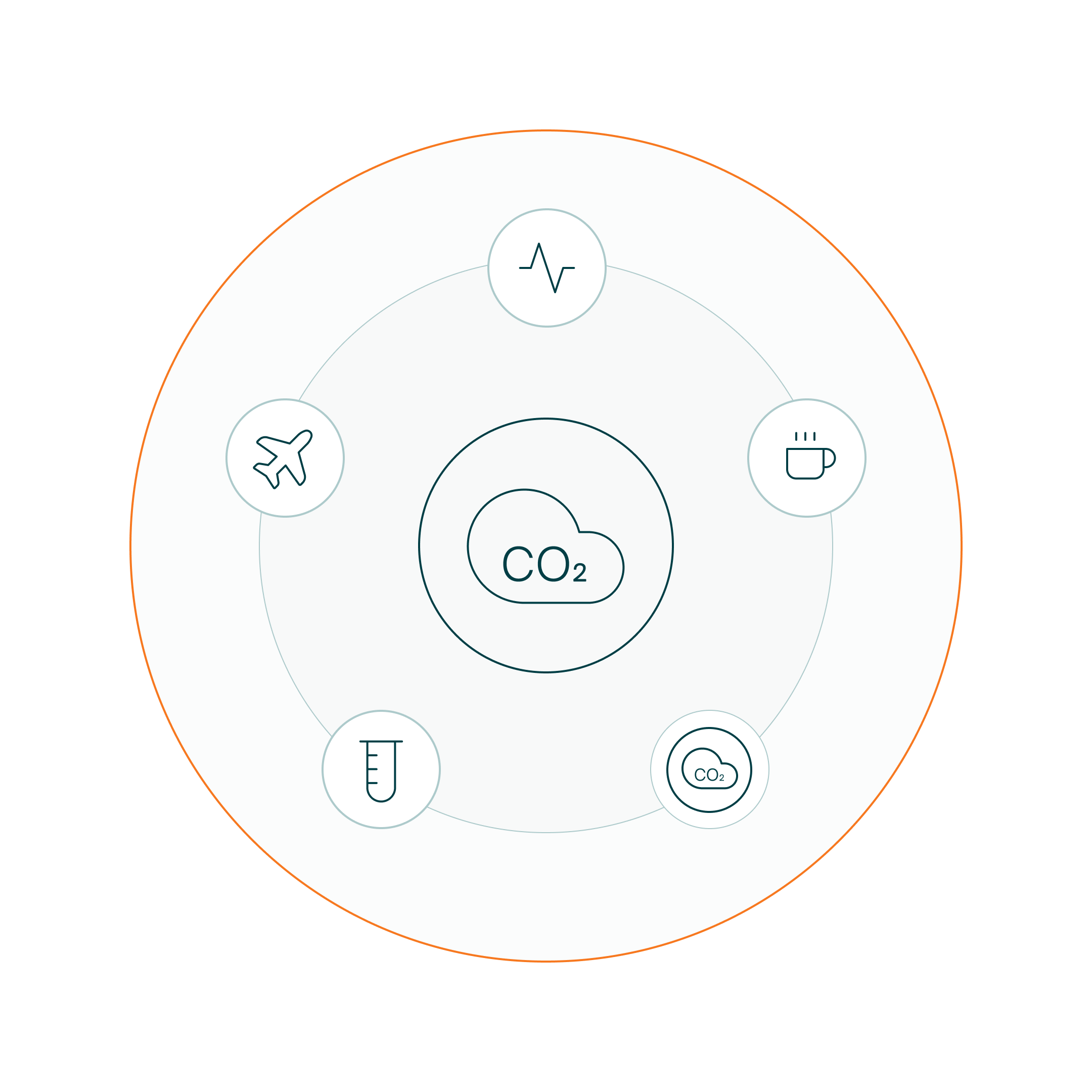
Key sectors
Sequestration
Providing biogenic CO₂ for permanent geological storage and carbon removal applications.
Sustainable Aviation Fuel (SAF)
Providing biogenic CO₂ for the UK's emerging SAF market
Food & Beverage
Supplying food-grade CO₂ for processing, packaging and carbonation.
Healthcare
Providing CO₂ for medical and specialist healthcare applications.
Chemical Manufacturing
Delivering a domestic source of biogenic CO₂ for industrial processes.
Bio-fertiliser
Bio-fertiliser creates agricultural and industrial value from nutrient-rich digestate, helping reduce reliance on expensive, synthetic, imported fertilisers.
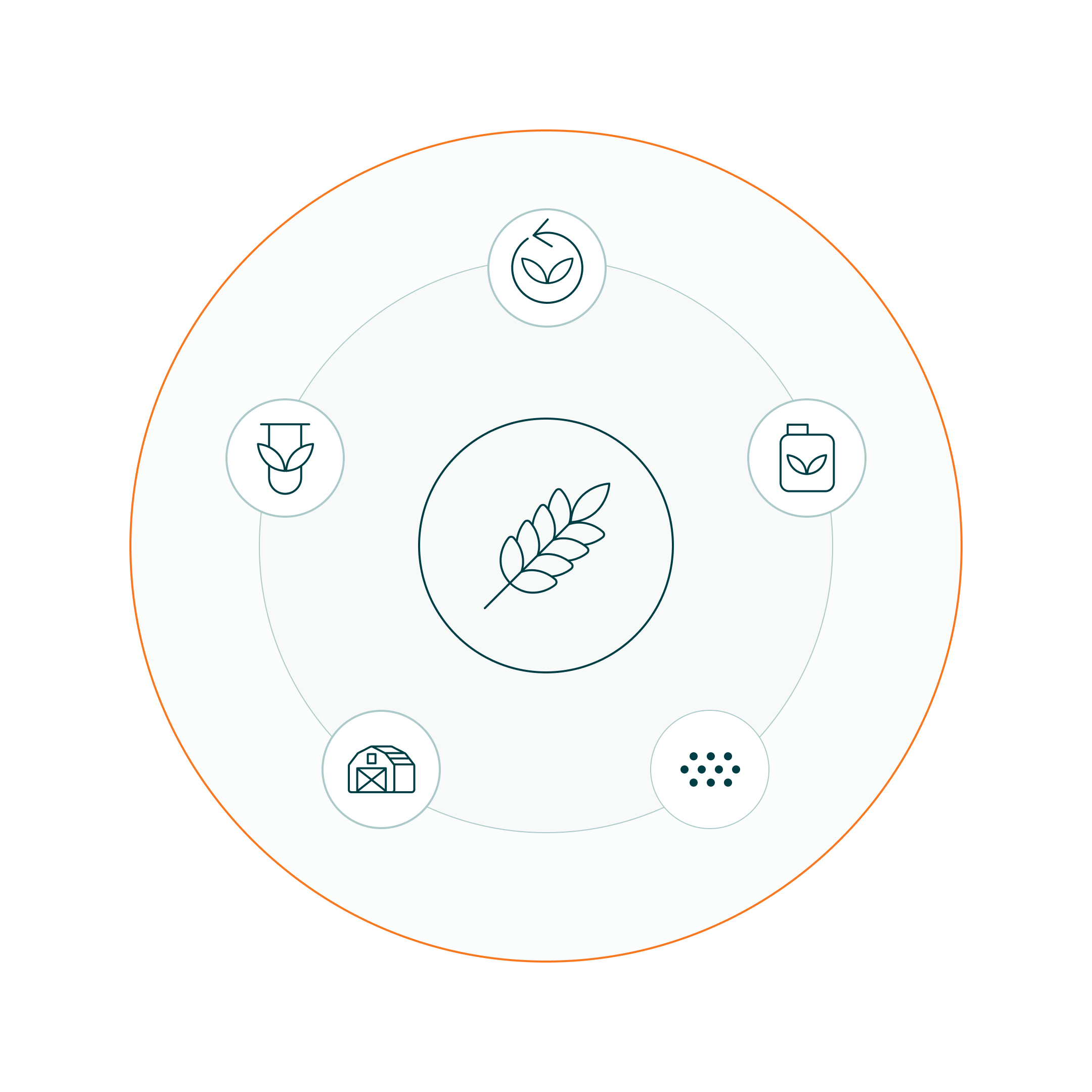
Liquid Bio-fertiliser
Returning nutrients to agricultural land as a valuable organic input.
Pellets & Mulch
Creating easier-to-store and transport soil improvement products.
Animal Bedding
Supporting livestock operations with recycled agricultural materials.
Nutrient Recovery
Recovering valuable nutrients such as struvite and NPK products for agricultural use.
Advanced Biomaterials
Unlocking future applications for lignin and other bio-based materials.
Solid Digestate
Providing a compost-like bio-fertiliser that returns nutrients and organic matter to the soil.
Biomethane infrastructure delivers benefits that extend beyond the facility itself.
By transforming organic feedstocks into carbon negative renewable natural gas, biogenic CO₂ and UK-produced bio-fertiliser, GMT's infrastructure supports domestic energy security, strengthens rural economies and creates long-term value across local supply chains.
The UK is increasingly recognising biomethane as an important part of future energy infrastructure, helping reduce reliance on imported fossil fuels and fertiliser while supporting resilient, dispatchable energy systems.
Our design, build, own and operate model creates platforms that that perform over the long term, creating value for local communities, agricultural partners and the wider UK economy.
Creating sovereign energy, CO₂ and fertiliser markets
Investing in local communities
High-efficiency infrastructure: low profile, small footprint

The GMT Platform
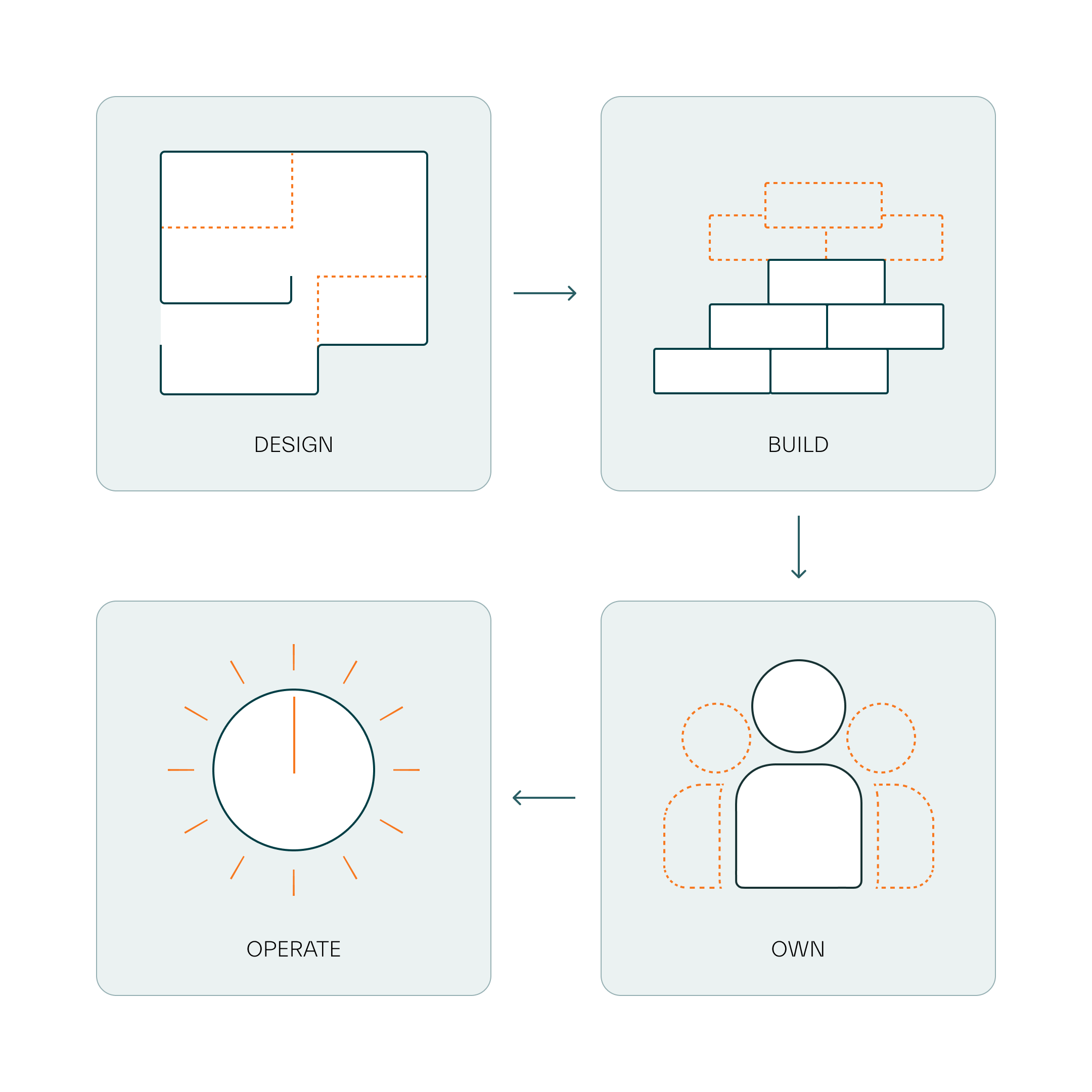
Design
Every project begins with a detailed understanding of feedstocks, site conditions, infrastructure requirements and long-term commercial outcomes. We develop biomethane platforms that are technically robust, commercially viable and designed to maximise the advantages of GMT's Plug Flow Reactor (PFR) technology.
Build
We manage the delivery of biomethane infrastructure through a disciplined development and construction process. From planning and engineering through to commissioning, our focus is on creating assets that are safe, efficient and built to perform reliably.
Own
As a long-term infrastructure platform, we maintain a direct interest in the assets we develop. This ownership model aligns decision-making with long-term performance, supporting responsible stewardship and sustained value creation across energy, carbon and agriculture systems.
Operate
Long-term value is created through consistent operational performance. We oversee the ongoing operation and optimisation of infrastructure assets, applying proven operational processes and the controlled digestion benefits of Plug Flow Reactor technology to support reliable biomethane production and long-term asset performance.
"GMT provided highly accurate projected output figures for our 165kW biogas plug flow system from day one. After seven years of operation, the plant’s actual performance has matched those projections, and their precision and expertise have been invaluable to our operations."
Robert Steell, Director, Brayfield Farms Ltd
Common questions
For Communities
Our sites are designed to have a low visual impact on the surrounding area. Site layouts typically range from 2–3 hectares, and our Plug Flow Digesters are designed to be no higher than 7 metres. That is significantly lower than traditional CSTR round tanks, which are usually 12–20 metres tall, helping the site sit more discreetly within the landscape.
Deliveries are carefully scheduled to minimise disruption. No deliveries take place before 7 AM, ensuring operations align with local regulations and community considerations. Focusing on energy dense feedstocks such as straw, means we typically have less vehicle movements than other AD plants.
On our Greenfield sites, GMT uses agricultural residues, primarily straw, as its feedstock. These materials are by-products of farming and are already part of the normal agricultural cycle, rather than crops grown specifically for energy production. On brownfield sites, which often come with energy crop included, we commit to phasing them out over a set period of time.
No, it doesn’t.
GMT uses straw as its primary feedstock which is a residue from the wheat and barley harvest. It often is left on fields and ploughed back into the land.
Unlike some anaerobic digestion facilities that process consumer food waste, GMT's plants only process agricultural residues, animal manure and other organic inputs. These materials are already routinely handled and spread on farmland as part of normal agricultural practice.
Our facilities are designed to minimise odour. The digestion process takes place within a fully enclosed, sealed system, preventing material from being exposed to the open air. Poultry manure is handled in relatively small quantities and is stored in enclosed reception areas equipped with odour control systems, in line with planning requirements.
In many cases, the digestate produced by our plants replaces the direct application of raw poultry manure to fields. Because the material has been through the anaerobic digestion process, this can reduce odour compared with spreading untreated manure.
We take odour management seriously and incorporate proven containment and ventilation systems throughout our facilities. We also welcome visitors to our operational sites so they can see first-hand how our plants operate.
GMT’s anaerobic digestion process helps create a more circular, lower-carbon system by turning agricultural residues into renewable energy and biofertiliser. Instead of being wasted, these materials are put to productive use, helping reduce reliance on fossil fuels and synthetic fertilisers. The result is a process that supports energy generation, soil health and a more carbon efficient approach to farming.
For Landowners
Once planning, permitting and design have been completed, our anaerobic digestion (AD) plants typically take around 15 months to construct. The planning, permitting and design process is usually completed within around one year, allowing sites to become operational in just over two years from the start of development.
Our anaerobic digestion (AD) plants are designed to operate for at least 35 years. To support this long-term operation, we secure similarly long-term lease agreements with landowners. Built for long-term performance and reliability, they provide resilient infrastructure that continues to deliver value for decades.
Yes. We can provide digestate produced by our plants to our landowners on attractive commercial terms.
Digestate is a nutrient-rich biofertiliser that can help reduce reliance on synthetic fertilisers, lowering input costs while returning valuable organic matter and nutrients to the soil. This supports soil health, improves soil structure and contributes to a more circular agricultural system by recycling nutrients back to the land.
By replacing manufactured fertilisers, digestate can also reduce the carbon footprint associated with crop production, while helping to build healthier, more resilient soils over the long term.
Our sites are designed to have a low visual impact on the surrounding area. Site layouts typically range from 2–3 hectares, and our Plug Flow Digesters are designed to be no higher than 7 metres. That is significantly lower than traditional CSTR round tanks, which are usually 12–20 metres tall, helping the site sit more discreetly within the landscape.
GMT uses agricultural residues, primarily straw, as its feedstock. These materials are by-products of farming and are already part of the normal agricultural cycle, rather than crops grown specifically for energy production.
No, it doesn’t.
GMT uses straw as its primary feedstock which is a residue from the wheat harvest. It often is left on fields and ploughed back into the land.
For Offtakers
Our plants are designed for a minimum operating life of 35 years, providing offtakers and investors with a long-term income opportunity. The focus is on building resilient assets that deliver reliable performance and value over the long term.
GMT offers offtakers a commercially secure, long-term partnership built around reliable supply, clear delivery structures and proven technology. This gives confidence that the project can perform consistently and support shared value over the long term.
GMT’s blueprint projects produce biomethane with carbon negative lifecycle emissions. Over 95% of GMT’s platform will be ISCC certified, the highest standard for supply train traceability and carbon intensity calculation.
GMT uses agricultural residues, primarily straw, as its feedstock. These materials are by-products of farming and are already part of the normal agricultural cycle, rather than crops grown specifically for energy production.
No, it doesn’t. GMT uses straw as its primary feedstock which is a residue from the wheat harvest. It often is left on fields and ploughed back into the land.
Message us
Whether you're a landowner, project partner, feedstock supplier or energy offtaker, we'd welcome a conversation about the role our biomethane platform can play in your long-term plans.